
You are the founder, the support desk, the person who answers email, and now the social media team. The goal is not to post like a brand with a staff of five. The goal is a routine small enough that you keep doing it in month six.
Here is the system I would hand to any founder who asks.
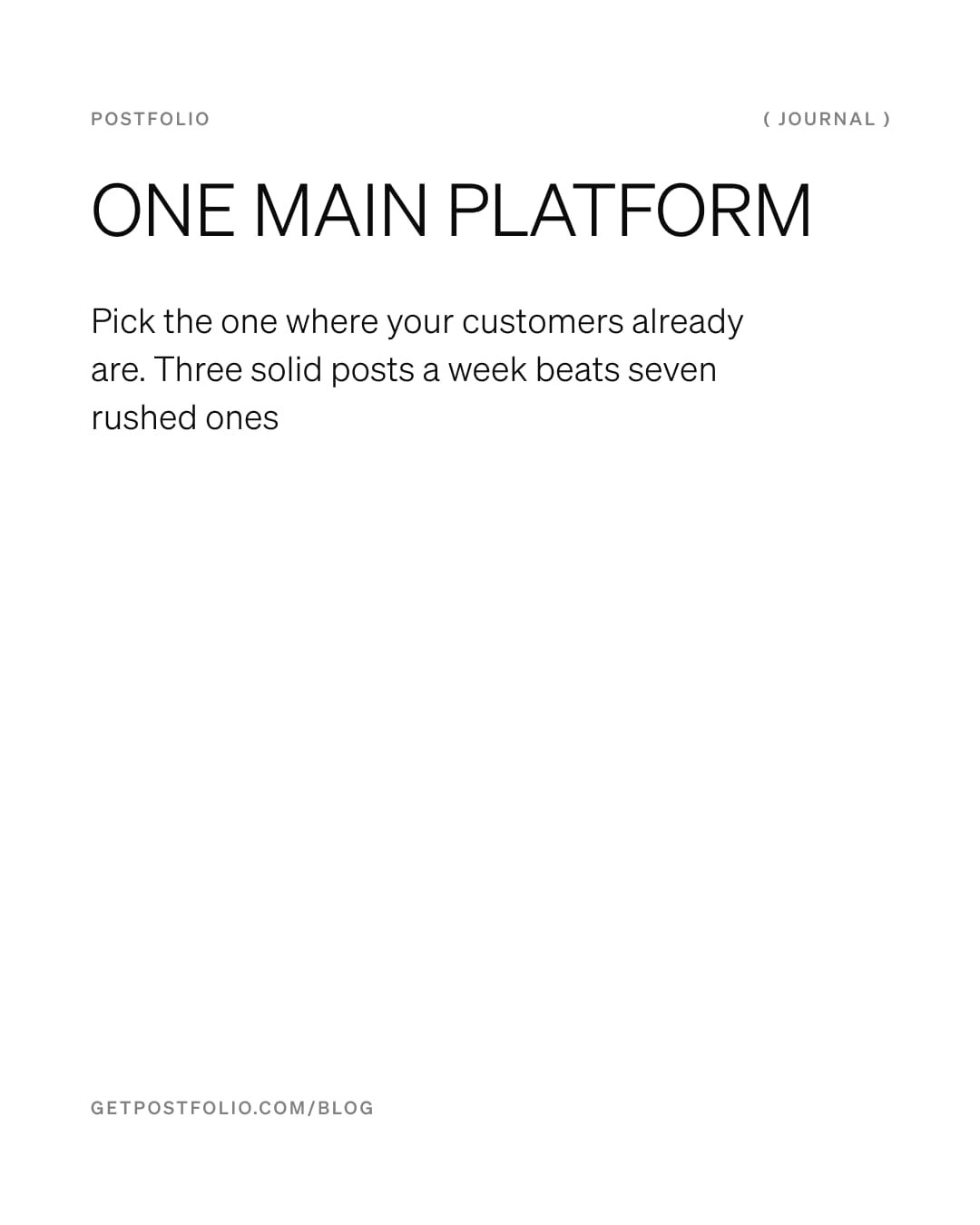
Pick one main platform and one backup
Most founders try four platforms and do all of them badly. Pick the one where your customers already spend time, and treat a second platform as a place to reuse what you made. If you sell to other businesses, that is usually LinkedIn or Instagram. If you sell to consumers, Instagram or TikTok. Everything else waits until the first two run on autopilot.
As a rule of thumb, three solid posts a week on one platform beats seven rushed ones across four. Consistency matters more than volume, and you can only be consistent at a volume you can sustain on a bad week.
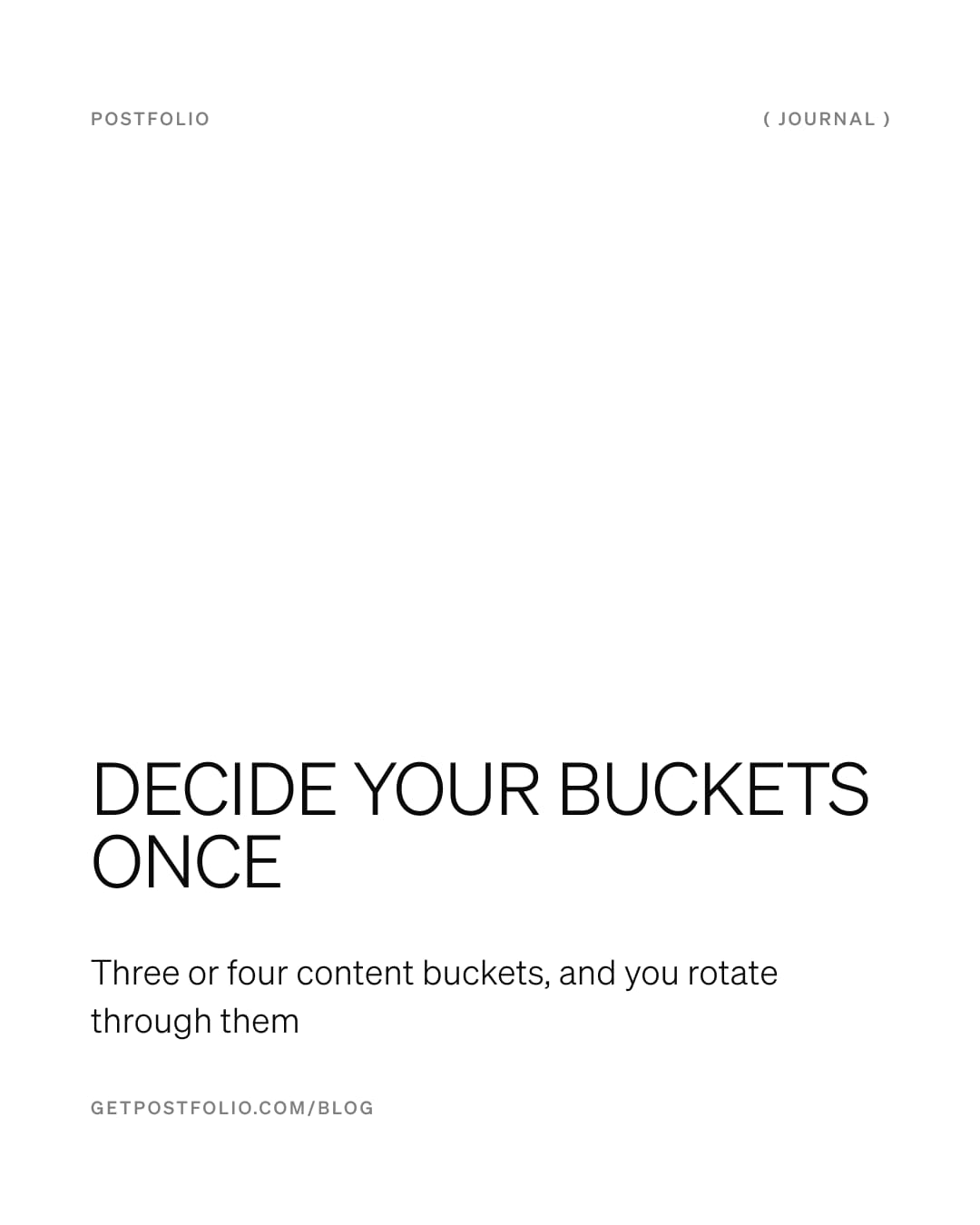
Decide your content buckets once
The hardest part of posting is staring at a blank screen deciding what to say. Remove that decision. Choose three or four buckets and rotate through them:
- Behind the scenes: how something gets made, a messy desk, a decision you are wrestling with.
- Proof: a customer result, a before and after, a message someone sent you (with permission).
- Teaching: one small thing your customers get wrong or wish they knew.
- Offer: the product or service, with a clear next step.
A simple split is two parts teaching and proof, one part behind the scenes, and one offer post every week or two. If every post is an offer, people stop reading. If none are, nobody knows what you sell.
( The short version )
Swipe through the carousel

Batch on one block a week
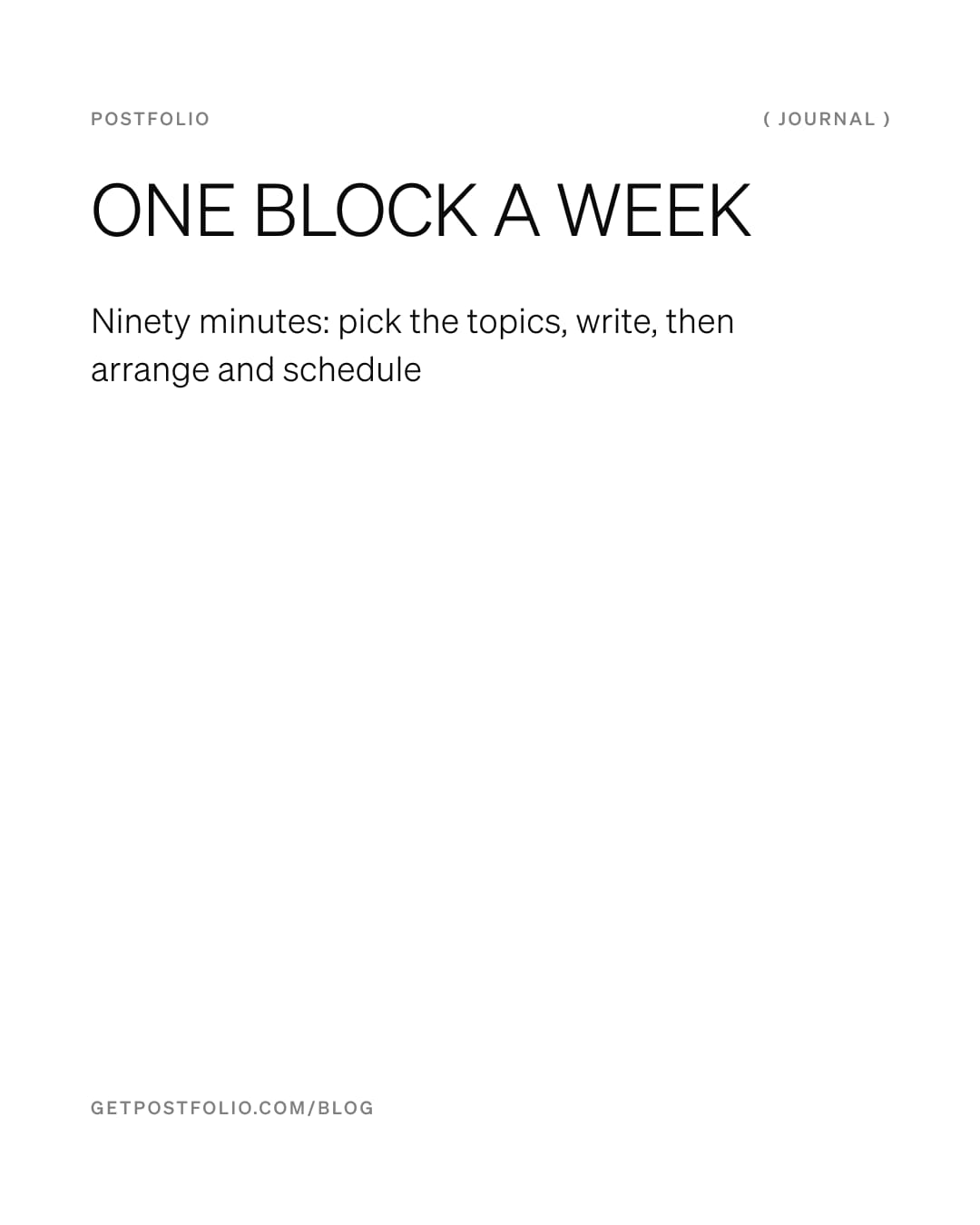
Writing and posting in the moment is what burns founders out. Instead, book one block, ninety minutes is realistic, and make the whole week at once.
1. Spend 10 minutes picking the topics for each bucket. 2. Spend 40 minutes writing captions and gathering photos or short clips. 3. Spend 30 minutes arranging and scheduling everything. 4. Spend 10 minutes lining up the next week's ideas in a notes file.
Keep a running list of ideas on your phone all week. Customer questions are the best source. If three people asked it by email, it is a post.
When you schedule, look at the whole feed together, not one post at a time. That is where a Grid planner earns its place. Postfolio's Grid planner shows your Instagram profile as it will look with the next posts in it, so you can spot three similar images in a row before they go live.
Shrink the replying, do not skip it
Posting is half the job. Replies and comments are the other half, and they are easy to let slide. Set two ten-minute windows a day, one mid-morning and one late afternoon, and answer everything then. Outside those windows, turn off notifications. You will reply faster than you think, and you will stop checking the app forty times a day.
Reply to comments with a real answer, not just a thumbs up. A short, specific reply often does more for the relationship than the original post did.
Know what to drop
The fastest way to stay consistent is to cut things on purpose. Here is what I tell founders to stop doing:
- Chasing every trend. Join one only if it fits what you already say.
- Posting daily because a guru said so.
- Rewriting captions five times. Write it, read it once, post it.
- Checking analytics every day. Once a week is enough.
For the weekly check, look at three numbers: which posts got saved or shared, which got comments, and which led to a message or a click. Do more of those. Rules of thumb like these are only a starting point, so adjust to what your own audience does.
Build a floor, not a ceiling
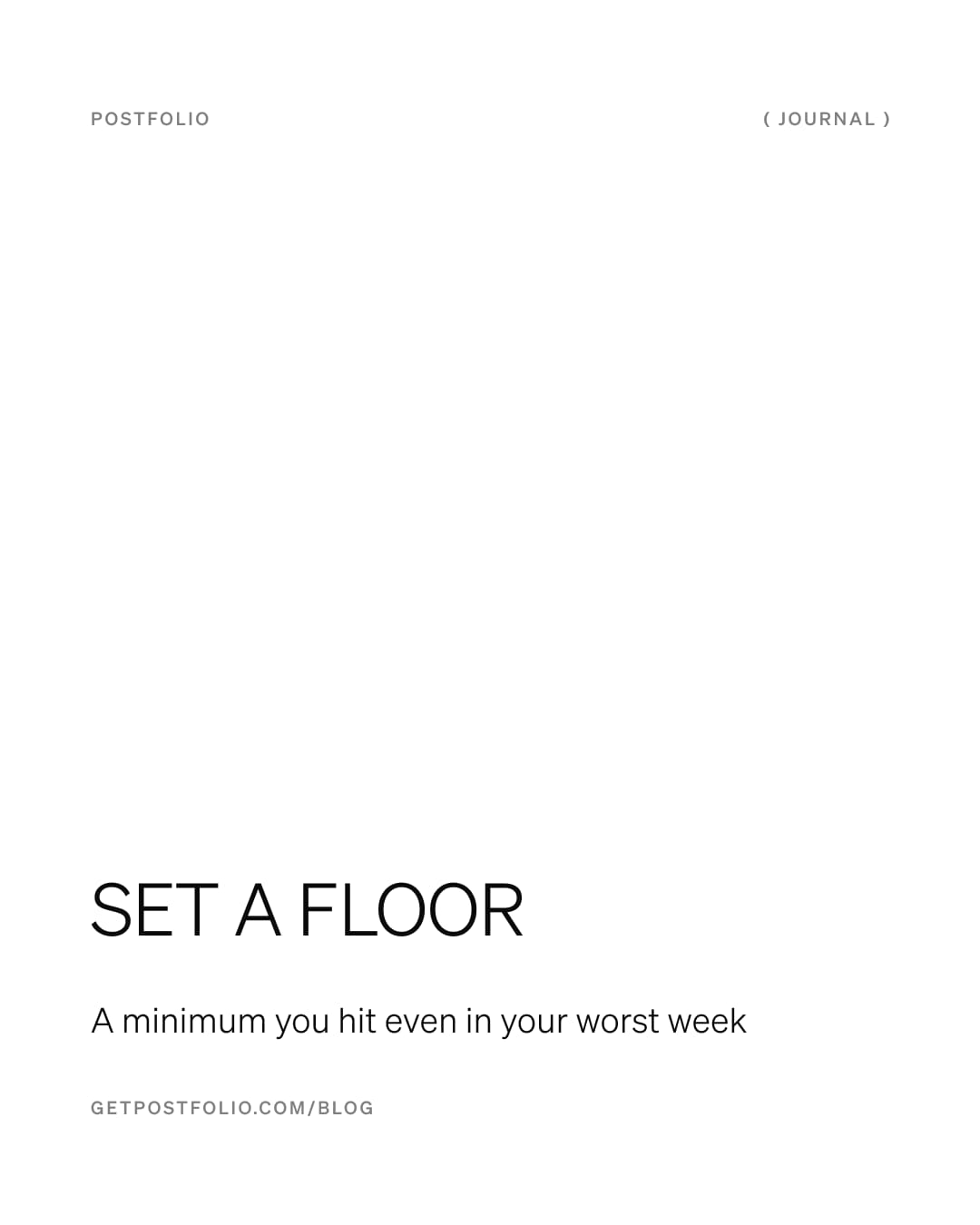
Set a minimum you will hit even in your worst week. Mine is two posts and the two reply windows. When a launch or a family emergency eats your time, you do the floor and nothing more. When things are calm, you do extra. This keeps the account alive through the weeks you would otherwise vanish, and vanishing is what actually hurts.
If a pile of drafts and half-written ideas builds up between blocks, a text-based assistant helps. Olio is an assistant you text over iMessage, so you can send it a note while you are in the car and have it waiting when you sit down to batch.
Start small this week. Choose your platform, write your four buckets on a sticky note, and book the ninety-minute block. The rest gets easier once there is a rhythm to protect.